Bedding · Material Guide
Mulberry West Silk Bedding: How Temperature Regulation Works
Silk’s appeal begins with its touch, but its place in the bedroom is about more than a polished surface. Fiber structure, airflow, moisture and construction all influence how a blanket feels as the night—and the room’s temperature—changes.
Published October 12, 2026
There is a particular quietness to silk bedding. It does not announce itself with the loft of a heavy wool blanket or the crisp familiarity of cotton. Instead, it falls with a fluid drape, feels smooth against the skin and offers warmth without the same sense of bulk. Those qualities make silk an intriguing layer for people who want a textile that feels light and refined while still contributing to comfort.
Temperature regulation is often part of silk’s appeal, but the phrase deserves a measured reading. No blanket can promise that every sleeper will feel cool in summer and warm in winter. Comfort depends on the room, the rest of the bedding, personal preferences, clothing, health and the way a particular textile is made. Fiber characteristics can help explain why silk behaves as it does; they cannot guarantee an identical sleep experience for everyone.
Mulberry West offers a useful reference point for considering the details behind a silk blanket. Its product information describes a generously sized blanket with a 75-gram silk fill and satin trim, and reports independent testing for purity, including testing for formaldehyde and lead. These are claims about a particular product, not a universal description of all silk bedding. Reading them alongside fiber content, construction and care instructions gives a more complete picture than relying on the word “silk” alone.
What people mean by silk temperature regulation
In bedding, temperature regulation is best understood as a collection of material behaviors rather than a built-in thermostat. A textile can influence how readily warmth is retained, how air moves through or around it, and how moisture is absorbed and released. The final sensation comes from the interaction of those properties with the sleeper and the sleep environment.
Silk fibers have a smooth, fine structure, and silk textiles can be made in different weights and constructions. A relatively light layer may feel less enveloping than a thick blanket, while a more substantial fill can provide greater insulation. Weave, quilting, edging and the presence of a lining or cover also affect the finished object. Two blankets made with silk may therefore feel noticeably different in use.
Airflow matters because the body continually exchanges heat with its surroundings. A textile that is breathable can allow some air movement, while its construction determines how much still air is held within the layer. Still air can contribute to insulation. The balance is not a simple contest between “breathable” and “warm”: a well-chosen bedding layer can have both qualities, with the degree depending on its thickness and structure.
Moisture is another part of the equation. Silk can absorb moisture, and its lightweight feel may appeal to sleepers who dislike a heavy, clammy layer. Absorption does not mean that a blanket eliminates perspiration or keeps every person dry. It describes one property of a fiber; how quickly moisture moves away or evaporates is influenced by the yarn, fabric, surrounding layers and conditions in the room.
For that reason, claims about silk temperature regulation are most useful when translated into practical questions: What is the fiber content? Is the blanket filled, woven, knitted or layered? How heavy is it? What does the manufacturer say about care? A useful description will help answer these questions rather than suggesting that one material performs identically across every body and season.
Mulberry West as a case study in product details
The Mulberry West silk blanket listed in the site’s bedding information is described as a generously sized silk layer with satin trim and a 75-gram fill. The product information also characterizes mulberry silk as temperature-regulating and moisture-absorbing, and says the materials were independently tested and found free of formaldehyde and lead. Those details are useful starting points, but they should be read as product-specific statements rather than assumptions about every silk blanket on the market.
Fiber content is the first point to establish. “Silk bedding” can refer to different constructions: a silk-filled blanket may have an outer shell made from another fiber, while a silk fabric blanket may be made primarily of silk throughout. The available description identifies a silk blanket and specifies its fill weight, but a careful shopper should consult the current item listing or label for the complete composition of both fill and cover. A clear declaration makes it easier to understand what is touching the skin and what contributes to insulation.
The stated 75-gram fill offers a construction clue, but it is not, on its own, a complete warmth rating. To interpret fill weight, it helps to know the area over which that weight is distributed, the finished blanket’s dimensions and the construction method. A number without a defined measurement basis can be difficult to compare with another product’s specifications. When comparing blankets, look for consistent units and ask whether the figure refers to the fill, fabric or total article.
Trim and finishing matter, too. Satin edging gives a blanket a distinct border and can affect its drape and appearance. It may also be a different material from the central panel, so it is worth checking the full component description if fiber sensitivity or composition is a concern. Finishing details are not merely decorative: edges, seams and quilting can influence how a blanket holds its shape and how it should be handled during cleaning.
Mulberry West’s listing is available as the 75-gram silk blanket. Its description notes Twin XL dimensions of 68 by 90 inches and lists several other size weights as unavailable. Availability and specifications can change, so verify the current listing before making a decision. Treat the product page as a source for that item’s stated details, not as a substitute for the sewn-in care label or any supporting test documentation.
What independent testing can—and cannot—tell you
Testing information is most meaningful when it is specific. A statement that a material has been independently tested is a useful signal to investigate, but it does not automatically explain the test method, the exact sample tested, the standards used or the scope of the result. If a product description names substances such as formaldehyde or lead, readers can look for documentation that clarifies what was tested and whether the assessment covered the finished product, a component or a batch of materials.
Independence can matter because it suggests the testing was not simply an internal quality check. Still, the words alone are not a complete certificate. A robust product record identifies the testing organization and explains the relevant test or standard. If the information is important to a purchasing decision—because of an allergy, sensitivity or other personal concern—it is reasonable to request the supporting details from the retailer or manufacturer.
It is also useful to distinguish between a claim about a specific set of substances and a broad claim of absolute safety or purity. Testing for formaldehyde and lead, for example, does not establish every possible quality or performance characteristic. It does not measure temperature regulation, predict comfort or replace a review of the complete material specification. The most responsible approach is to keep each claim in its proper lane.
Certification and testing language can sound similar while serving different purposes. A certification may involve a defined standard and recurring requirements; a test report may document results for particular samples. Neither should be treated as a vague badge of quality. Look for the name of the standard or testing body, a clear scope and wording that accurately describes what was verified.
Silk, wool and cotton: different ways to build comfort
Comparing bedding materials is less about choosing a universal winner than identifying the properties that suit a particular household. Silk is often selected for its smooth surface, light drape and refined feel. Cotton is familiar, versatile and available in an enormous range of weaves and weights. Wool is frequently valued for insulation and its ability to take up moisture. The precise performance of each depends on the fiber, fabric and finished construction.
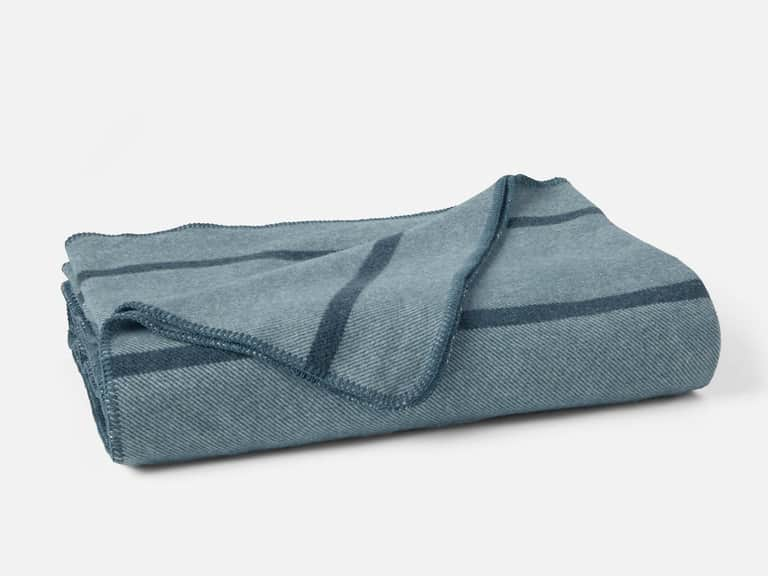
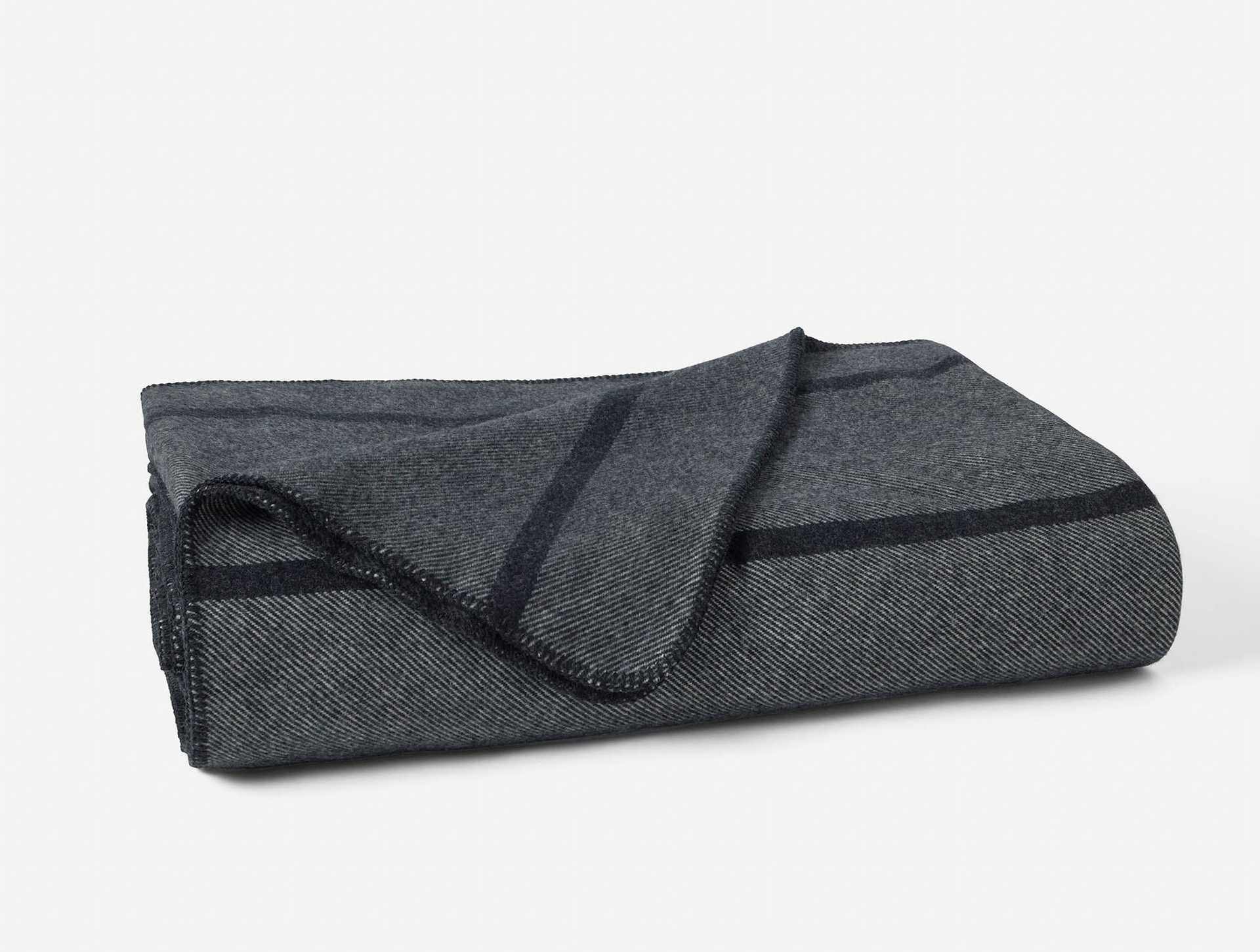
A wool blanket may feel more textured or substantial than a lightweight silk layer, though not every wool textile is heavy. For example, the Tahoe Wool Blanket is described as 100% NATIVA Regen-Shaniko wool, brushed for a soft hand and finished with charcoal heather stripes. Its listing recommends dry cleaning. Those details make it a useful contrast in material and care, but they do not establish that wool is inherently warmer or more suitable for every sleeper than silk.
Cotton’s everyday familiarity often comes with practical advantages, particularly when a product is designed to be washable. The Downtown Company Cashmere-Soft Blanket and Throw, for instance, is described as a 50% acrylic and 50% cotton blend. Despite the “cashmere-soft” name, it is not made from cashmere. This is a reminder to read the composition rather than infer a material from a product name or tactile description. Its washable construction also presents a different care proposition from a silk blanket whose listing says it is easy to clean but does not, by itself, replace the manufacturer’s detailed instructions.
When comparing silk with other bedding materials, consider how the blanket will be used. A top layer that is removed during warmer nights has a different job from a year-round cover used alone. A throw placed over a sofa may be chosen for touch and appearance, while a bed blanket may need to fit a specific size and layering routine. The textile’s role matters as much as its fiber identity.
Reading the label before bringing silk bedding home
A thoughtful review begins with a short checklist. First, find the full fiber composition, including the outer fabric, fill, lining and trim where those are specified. A blanket may include more than one material, and a broad product name does not reveal every component. If a listing provides only a partial description, seek clarification rather than assume the entire article is made of one fiber.
- Confirm the construction: Is the item a filled blanket, a woven silk layer or another type of bedding?
- Check measurements: Compare the finished dimensions with the bed and with the intended layering arrangement.
- Interpret weight carefully: Look for the measurement basis, not just a number that may be difficult to compare.
- Read the care instructions: Confirm whether the item is washable, requires professional cleaning or needs another specific method.
- Review testing language: Look for the substances, scope and supporting documentation behind any stated result.
- Consider your own needs: Sensitivities, climate, sleeping habits and willingness to follow delicate-care instructions all matter.
Size deserves particular attention when a blanket is intended for a bed rather than occasional lounging. A layer that falls short of the mattress edges may be perfectly suitable as a personal cover, but less effective as a shared top layer. Conversely, an oversized blanket can add generous drape but may be harder to manage during cleaning. The dimensions should match the intended use, not simply the bed label.
Care is part of the ownership equation. A luxurious fiber that requires special handling may be an excellent fit for someone who is comfortable with that routine, but less practical for a busy household seeking frequent machine washing. Before purchase, compare the care label with your actual habits. If the product listing is vague, ask for the precise instructions rather than relying on general advice about silk.
Silk care: preserve the hand, shape and finish
Silk care should begin with the manufacturer’s directions, because the correct method depends on the complete article, not just its principal fiber. A silk-filled blanket with satin trim may require different handling from a washable silk pillowcase or a simple woven silk scarf. The label accounts for the product’s construction and finishing in a way that broad rules cannot.
Do not assume that “easy to clean” means machine washable. It may refer to general maintenance, spot cleaning or a recommended professional service. If the instructions specify dry cleaning, follow them. If washing is permitted, check the temperature, detergent, cycle, drying method and any warnings about wringing, heat or agitation. Gentle handling can help protect delicate fibers and the blanket’s structure.
For routine upkeep, airing bedding in a clean, shaded space may help refresh it between deeper cleaning, provided the manufacturer’s guidance allows this. Avoid exposing delicate silk to harsh conditions or leaving it in direct, intense sunlight for extended periods, as light and heat can affect textiles over time. Store a clean, fully dry blanket in a breathable place, away from dampness and potential snags. A protective cover can reduce direct contact with dust and everyday spills.
Stains are best addressed promptly and cautiously. Blot rather than rub, and test any proposed treatment in an inconspicuous area only if the care instructions permit it. Household remedies that are suitable for one fabric can damage another. When in doubt, seek advice from a professional cleaner familiar with silk and describe the complete construction, including fill and trim.
Care has a direct relationship to long-term value. A fiber may be beautiful and comfortable, yet its practical lifespan depends partly on how it is used, cleaned and stored. Treating the care label as part of the product specification helps set realistic expectations before the first night it is placed on the bed.
A measured view of everyday comfort
Silk bedding can be appealing for its lightness, smooth hand and capacity to contribute to a comfortable layering system. Its structure and moisture behavior help explain why it is often discussed in relation to temperature regulation. Those characteristics are meaningful, but they should not be mistaken for a promise that a silk blanket will resolve night sweats, prevent overheating or feel perfectly warm in every climate.
The most reliable decision combines material knowledge with the details of the particular blanket. Look for a complete fiber declaration, clear construction information, useful measurements and care guidance you can realistically follow. Where a brand makes testing claims, seek specifics about what was tested and how. Compare silk with cotton or wool according to your preferences and use case, not according to broad claims that one fiber is universally superior.
Mulberry West’s product information makes silk a tangible subject for that kind of scrutiny: it identifies a 75-gram fill, satin trim and reported independent testing, while inviting the reader to look beyond the surface description. In the bedroom, luxury is not only a sensation. It is the combination of a material that suits the sleeper, craftsmanship that supports its intended use and care instructions that make sense in daily life.
Frequently asked questions
Does silk bedding keep you cool?
Silk’s light feel, breathability and moisture absorption may make it comfortable for some sleepers, but cooling is not guaranteed. Room temperature, blanket weight, construction and personal preference all influence the experience.
Is every silk blanket made entirely of silk?
No. Some products combine silk fill with a different shell, lining or trim. Check the full fiber composition for the specific blanket rather than relying on its name.
What does a 75-gram silk fill tell me?
It identifies a stated fill amount, but is most useful when the product also explains the measurement basis and finished dimensions. Fill weight alone is not a universal measure of warmth.
Can I wash silk bedding at home?
Only if the manufacturer’s care instructions allow it. Follow the specific label for the complete blanket, including its fill and trim, and do not assume that all silk bedding has the same cleaning requirements.