Bedding · Materials & Care
Cashmere as a Comforter Layer: Comparing Warmth, Fill, and Care
A bed’s warmth is not dictated by one fabric alone. Fiber, construction, room temperature and the way layers work together all shape the feeling of a night’s sleep. Cashmere brings a rare combination of softness and lightness; wool fill offers a different kind of insulation, with a structure designed to add warmth across a larger area.
Understanding the distinction helps clarify a deceptively simple choice: should you use a cashmere blanket as a finishing layer, or choose a wool-filled comforter as the bed’s principal source of insulation? The answer depends less on the prestige of a fiber than on how you sleep, what your climate demands and how much care you are prepared to give your bedding.
First, distinguish the layer from the fill
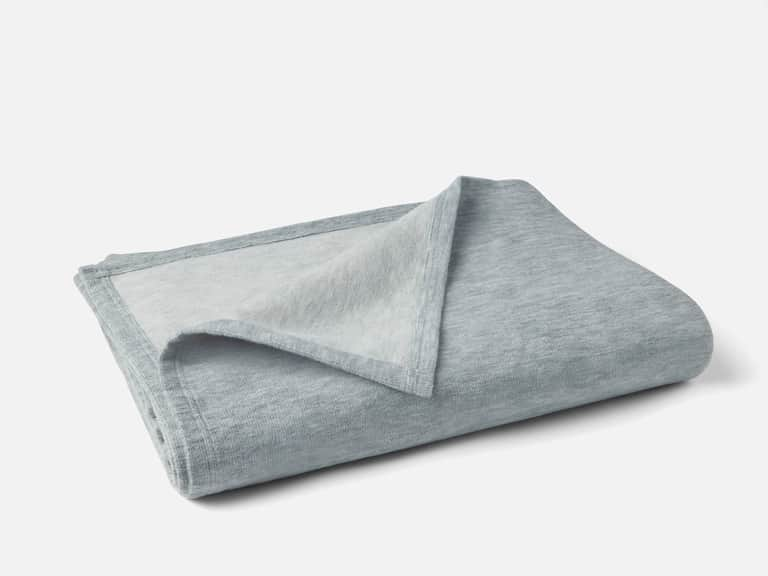
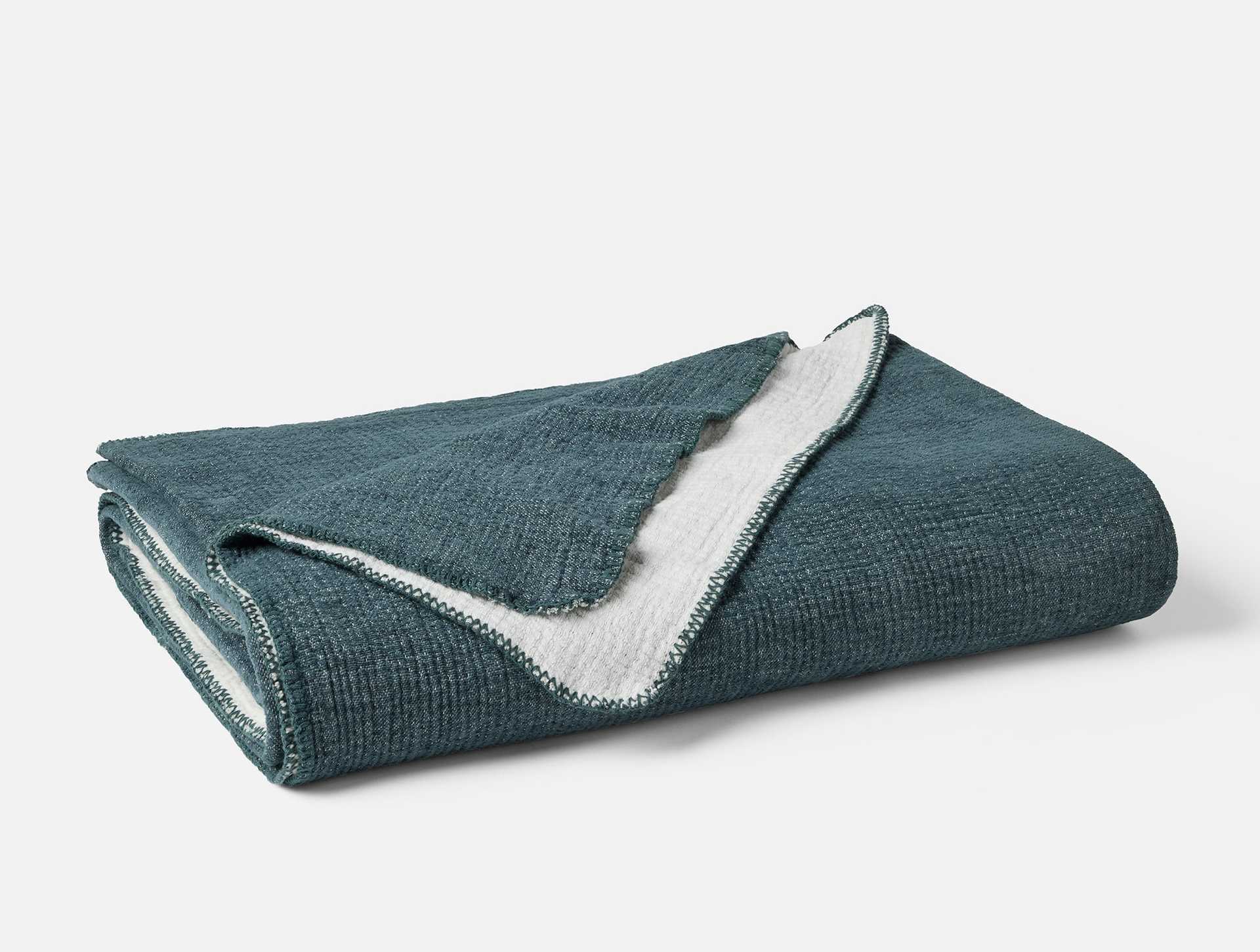
The word comforter can describe a finished bed covering, but its construction matters. A woven cashmere blanket is a textile layer: its fibers are arranged into cloth, and warmth comes from the fabric’s thickness, weave and the air held within it. A wool-filled comforter, by contrast, contains insulating fiber enclosed in a shell, often with quilting or another form of compartmentalized construction to help distribute the fill.
These are not interchangeable formats. A blanket can lie directly against the sleeper, fold neatly at the foot of the bed or sit over a duvet for a little additional warmth. A filled comforter generally provides more substantial coverage and insulation. It is often used as the main top layer, although it can also be paired with a sheet, duvet cover or lighter blanket depending on the season.
This distinction is especially useful when comparing cashmere and wool. Cashmere is prized for a fine, soft hand and a high warmth-to-weight impression; its appeal is often tactile as much as thermal. Wool used as comforter fill has a different job: loft and fiber arrangement help create a layer of still air that slows heat loss. One is not automatically warmer in every finished product. Weight, density, quilting, shell fabric and dimensions all influence the result.
Cashmere’s quiet luxury: warmth without heaviness
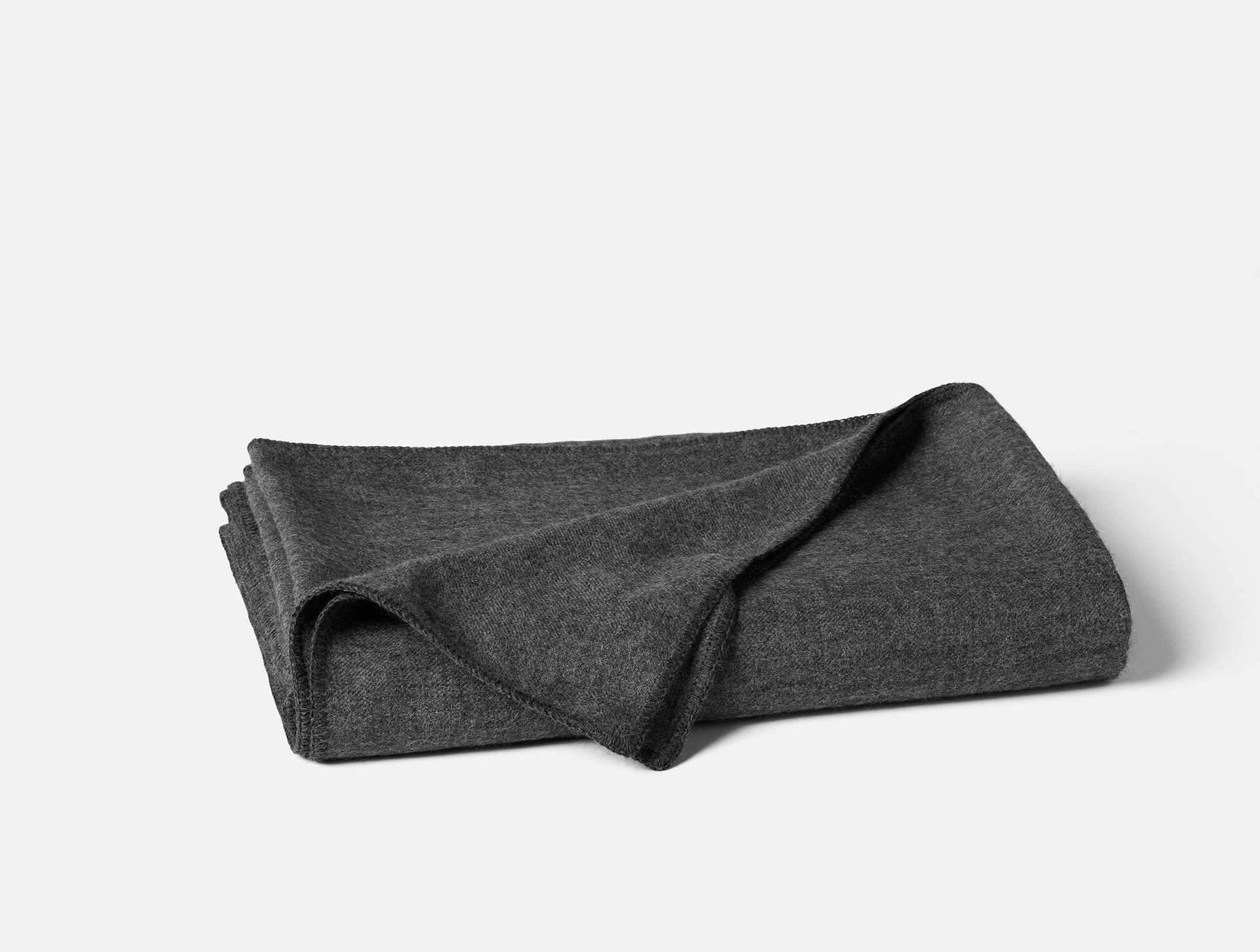
Cashmere comes from the soft undercoat of cashmere-producing goats. The fine fibers are valued for their softness and insulating capacity, though the feel and performance of a finished textile depend on fiber quality, processing and construction. In a blanket, a supple cashmere fabric can offer warmth without the dense, weighty sensation some sleepers dislike. It also drapes gracefully, making it at home over a bed, a reading chair or the shoulders on a cool evening.
The phrase “warmth without weight” is best understood as a comparative impression, not a guarantee. A thin cashmere throw cannot be expected to perform like a thick, filled comforter in a cold room. A generous blanket may be a lovely supplementary layer, but its warmth depends on dimensions, thickness and how much of the bed it covers. Look beyond the fiber name to the actual measurements and construction details.
Cashmere can be appealing to people who prefer a soft surface near the skin or want a layer that can be added and removed easily. It may also suit a carefully made bed where texture and drape are part of the experience. But softness does not tell you everything about durability or care. Fine fibers can be vulnerable to friction, snagging and unsuitable washing, so a cashmere blanket should be treated according to its specific label rather than a generic assumption about wool.
It is also worth being precise about product descriptions. “Cashmere-soft” can refer to a hand-feel rather than fiber content. A blend containing acrylic and cotton, for example, is not the same material as a blanket made from 100% cashmere. Read the fiber-content statement, not just the name or marketing language, before comparing price, warmth or care requirements.
Wool fill and the architecture of insulation
Wool’s role in a comforter is shaped by both the fiber and the way it is assembled. Wool fibers have a naturally crimped structure, and a well-distributed fill can create small spaces that hold air. The overall warmth then depends on the amount of fill, the comforter’s dimensions, the shell, quilting pattern and whether the fill stays evenly spread over time.
That construction makes a wool-filled comforter different from a woven wool blanket, and different again from cashmere cloth. It can cover the body more uniformly than a smaller throw, while quilting helps control movement of the fill. The fill weight is a useful detail when supplied, but it should not be read in isolation: a comforter’s warmth is a product of the complete assembly, not a single number.
Wool is often selected by sleepers interested in breathable bedding and moisture management. Natural fibers can interact with moisture and temperature in ways that feel comfortable to many people, though individual experience varies with the room, sleepwear, mattress, duvet cover and personal sensitivity to heat. Claims of temperature regulation should not be mistaken for a promise that a comforter will keep every sleeper at a perfect temperature.
A useful example is the Sleep and Beyond myMerino Wool Comforter, Light. Its listed construction includes superfine merino wool fill and an organic cotton sateen shell, with a lighter fill weight intended for use across three seasons. The product information gives a fill weight of six ounces per square yard and notes that its quilting is designed to help prevent the wool batting from shifting. These details make it a practical reference point for understanding how a wool comforter is specified; they do not make it a direct substitute for a cashmere blanket.
Its care guidance is equally instructive. The maker recommends protecting the comforter with a removable duvet cover, spot-cleaning the cotton shell where appropriate and seeking professional cleaning for more substantial stains. As with any bedding, follow the current instructions supplied with the individual item, since fiber blends and construction can change the correct method.
Warmth is a system, not a fiber label
When people ask whether cashmere or wool is warmer, they are often comparing unlike things: a thin woven throw with a lofty comforter, or a small blanket with a full-bed covering. A fair comparison begins with format and use. Is the textile meant to be the main insulating layer, or a flexible addition? Does it cover the sleeper fully? Is it used alone or on top of a duvet?
Several factors shape perceived warmth:
- Coverage: A layer that falls short at the shoulders or sides may feel cooler than one with generous dimensions, even if the fabric itself is insulating.
- Loft and density: A lofty filled comforter can trap more still air than a thin woven blanket, while a dense blanket may feel substantial without providing the same kind of loft.
- Construction: Quilting, weave, knit, seams and edge finishes influence how a textile sits, drapes and distributes insulation.
- Layering: A sheet, duvet cover and blanket each contribute to the overall system. The ability to remove a layer can be as important as its maximum warmth.
- Personal comfort: Sleep temperature, room conditions, clothing and sensitivity to texture vary considerably from person to person.
For a cool bedroom, a wool-filled comforter may be a more practical primary layer than a lightweight cashmere throw. For someone who already has a duvet but wants an elegant, adjustable supplement, a cashmere blanket may be the more useful choice. In a heated home or transitional season, either material may feel too warm if the surrounding layers are already substantial. The goal is not to accumulate insulation, but to build a bed that can adapt.
How to read labels before choosing
Beautiful product photography and evocative names can suggest a feeling; the label explains what the textile is. Start with the fiber content, and check whether the item is pure cashmere, a cashmere blend, wool fabric or a filled comforter containing wool. Then look at the country or countries of origin, shell composition, fill weight if available, dimensions and care instructions.
Construction details can answer questions that the fiber name cannot. A blanket described as woven or knitted is not built like a comforter with fill and quilting. A cashmere product’s weave and finished weight affect how it drapes and how much warmth it adds. For a wool comforter, shell fabric, fill quantity and quilting are central considerations. If these specifications are missing, the product description may not provide enough information to make a confident comparison.
Pay attention to the distinction between origin claims. Fiber sourcing, spinning, weaving, assembly and finishing may take place in different locations. “Made in” and “sourced from” do not necessarily describe the same stage. If provenance matters to you, seek precise statements about which part of the supply chain each claim refers to, and look for traceability or certification details where available.
Price can be a clue to material and workmanship, but it is not proof of authenticity or performance. Compare the declared composition and construction, and be cautious of broad claims that do not identify the fiber content. A well-described cotton or wool layer can be more suitable for a particular household than a costly cashmere textile whose care, dimensions or warmth do not match the intended use.
Care: protect the fiber, preserve the structure
Care is part of the buying decision, not an afterthought. Cashmere and many wool textiles may be sensitive to heat, agitation and abrupt changes in washing conditions. Some items are washable; others specify professional cleaning. A blanket’s fiber, dye, weave, finish and construction all matter, so the care label takes precedence over general advice.
For cashmere, regular airing and careful storage may reduce the need for frequent cleaning. When a spill occurs, blot rather than rub, and consult the label before applying water or detergent. Rubbing can distort the surface or encourage pilling. If the instructions call for professional cleaning, use a cleaner accustomed to handling fine animal fibers. Never assume that a garment-care routine is appropriate for a large blanket.
For wool-filled comforters, a removable duvet cover acts as a protective barrier against skin oils, dust and everyday marks. Spot-cleaning may be suitable for minor soil if the manufacturer allows it, but soaking or machine-washing a bulky filled item can compromise its shape or distribution of fill. Airing according to the care guidance can help refresh bedding between cleanings. Store wool items clean and completely dry, protected from pests and excessive moisture.
Care instructions may vary even within one fiber family. A washable wool-blend blanket and a dry-clean-only wool comforter are not contradictory; they are different products with different constructions. Check the label before washing, drying or pressing, and avoid substituting a familiar routine simply because another wool item tolerated it.
Pilling is another issue worth approaching calmly. Small surface pills can appear where fibers encounter repeated friction, such as along the edge of a blanket or where it rubs against upholstery. Their presence does not by itself establish that a textile is counterfeit or poorly made. Use an appropriate fabric comb or pill remover only if the manufacturer recommends it, and work gently to avoid cutting or pulling the fabric.
Choosing for climate, sleep style and daily life
Begin with the room rather than the label. A cold, draft-prone bedroom may call for a more substantial comforter than a well-heated space. In a home where temperatures change through the night, modular layers can be more comfortable than one heavy covering. A light blanket folded at the foot of the bed gives the sleeper an option without requiring a full bedding change.
Consider how you sleep. Someone who tends to feel cold may value the coverage and fill of a wool comforter. Someone who sleeps warm may prefer a lighter layer that can be removed or shifted. If tactile softness is central, cashmere may have particular appeal, but sensitivity to animal fibers should be taken seriously. Touching a swatch, where possible, can tell you more about hand-feel than a description can.
Then consider the household routine. A blanket used every day on a sofa may encounter more friction, pets and spills than a decorative layer kept at the end of a bed. In that setting, easy cleaning and resilience can matter more than a delicate hand. A comforter protected by a washable cover may suit someone willing to maintain a layered system, while a blanket with demanding care instructions may be better reserved for occasional use.
Dimensions are practical, but often overlooked. Measure the bed and consider how much overhang you want. A throw is usually intended for an individual or a smaller area, whereas a bed blanket needs enough width and length to cover sleepers comfortably. Confirm the finished measurements rather than relying on labels such as “queen” or “king,” which can vary across makers.
Cashmere, merino and the question of alternatives
Cashmere is not the only natural fiber capable of giving a bed a soft, insulating character. Merino wool is used in both woven textiles and fill, while alpaca, cotton and silk offer different combinations of drape, breathability, texture and care. Each material has its own strengths, and no single fiber is universally best.
Merino’s role in a filled comforter makes it a useful comparison with cashmere as a blanket layer. Rather than asking which fiber is more luxurious, compare the textile’s purpose. A cashmere blanket is a surface layer whose appeal may lie in its light hand and elegant drape. A merino-filled comforter is engineered to provide broad, continuous insulation. Their value is measured by different standards.
Blended bedding can also be a thoughtful choice. Cotton may contribute breathability and a familiar feel; wool may add insulation; recycled fibers can make use of existing material streams. The right blend depends on actual percentages and construction. Read the composition carefully, especially where a product name uses a sensory phrase that could be mistaken for a fiber description.
A practical decision checklist
Before choosing between a cashmere blanket and a wool-filled comforter, pause over a few grounded questions:
- Do you need a primary bed covering, or a flexible supplementary layer?
- Is the item genuinely cashmere, a blend, or simply described as cashmere-soft?
- What are the stated dimensions, construction and finished weight?
- For a comforter, what is the fill material and fill weight, and how is it held in place?
- Does the care routine fit your household and the frequency of use?
- Are sourcing, origin and certification statements specific enough to assess?
- Will you need to add or remove warmth as seasons or room conditions change?
These questions turn a mood-led purchase into a considered one. The most satisfying bedding is not necessarily the most expensive or the most delicate. It is the layer that performs as intended, feels right against the skin and can be maintained without guesswork.
The considered conclusion
Cashmere and wool comforters answer different needs. Cashmere offers a fine, soft, relatively light textile that can bring warmth, drape and a luxurious surface to the bed. A wool-filled comforter uses fill and construction to create a more continuous insulating layer, with warmth shaped by its weight, shell and quilting. One can complement the other, but neither should be judged without knowing its format.
For a buyer weighing the two, the most reliable route is simple: identify the intended layer, verify fiber content, examine construction, compare dimensions and read the care label before deciding. A cashmere blanket may be the beautiful finishing touch; a merino wool comforter may be the practical foundation. The right choice is the one that brings the bed into balance—warm enough, breathable enough, and easy enough to live with night after night.